
My 1st Deployment
Exploring the Mind-Body Connection Under Pressure

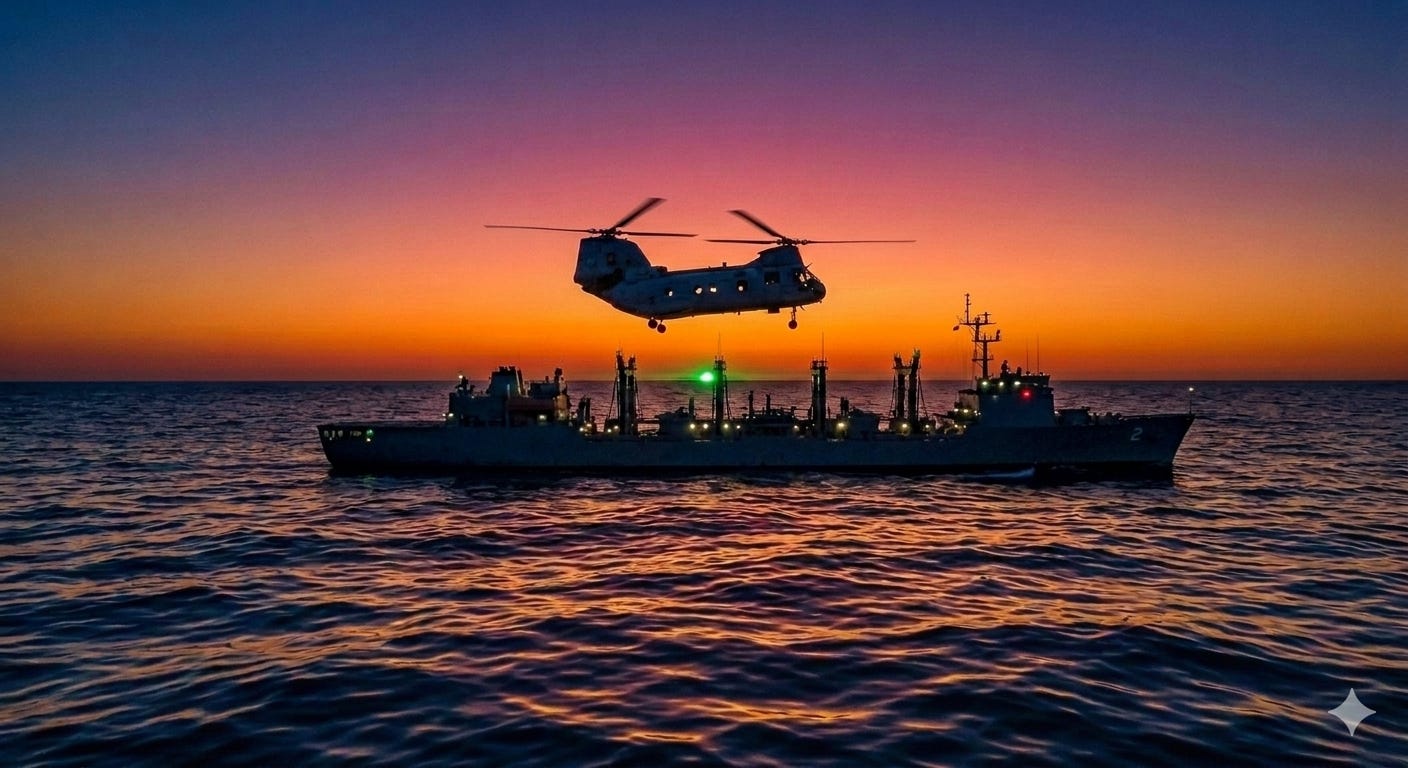
In 1987, I finished Navy Flight School and received orders to Helicopter Combat Support Squadron-Six flying the H-46 Sea Knight—the giant green, tandem-rotor helicopter you see in old Vietnam movies. The H-46 is beautiful in an awkward, ugly sort of way—a cross between a hummingbird, a pelican, and a dump truck.
The US Navy’s job is power projection at sea, so I went to sea for six months on a fast, combat support tanker called the USS Milwaukee. The Iran-Iraq war was going strong and our battlegroup was assigned to deploy through the Suez Canal, head toward the Middle East, and then loiter outside the Persian Gulf. Three days after we set sail from Norfolk, we had our first operational assignment: fly Vertical Replenishment (VERTREP), slinging parts and supplies externally under our helo via hook and cargo net[i], while our ship refueled the battlegroup aircraft carrier and another ship alongside.
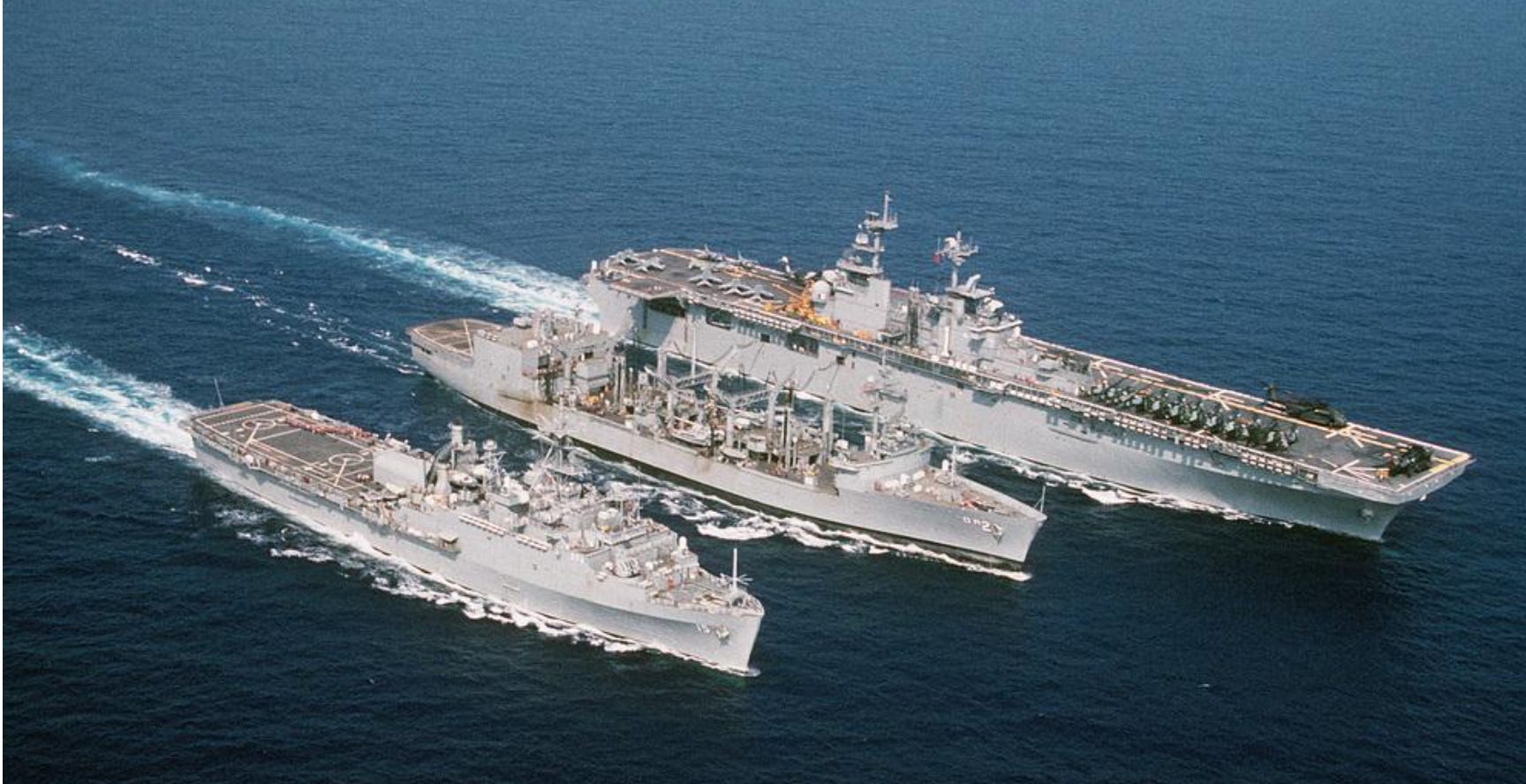
I walked around the Milwaukee’s weather decks as the ships pulled into position. Waves crested in sync, white caps breaking, spray misting the air behind like fairy dust. It was a whole new world; everything fascinated me. The air felt fresh and clean as the wind slapped my face. I’d trained for VERTREP but never done a real one. I was eager for the experience, ready to test my skills and prove my mettle. But I was also a little scared. Scared in a good way. The kind of fear that wakes you up, sharpens your survival instincts. Any pilot who said they weren’t scared flying off a ship would be a liar. Or a fool. It’s too easy to screw up, everything moving fast, obstacles close, danger everywhere. The slightest mistake, you’re in the drink.
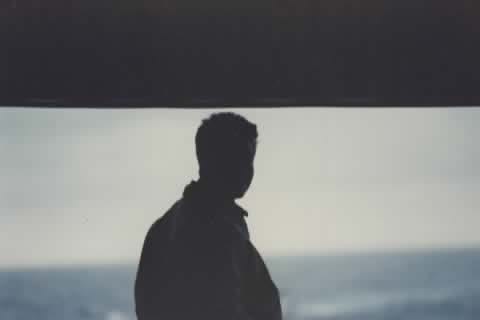
I zipped my leather flight jacket higher and flipped the faux fur collar up against the windchill. I thought about an old Gunny I served with back in the Corps. He’d said the biggest aspiration for a Marine was to get his service record stamped ‘NAFOD’—No Apparent Fear of Death.
“Sometimes—back in ‘Nam—when we really hit the shit,” he’d said, spitting tobacco juice into the dirt. “You know, a high pucker factor situation? I’d think NAFOD. Cleared my head, helped me lock-in, focus on the task at hand.”
NAFOD became my credo.
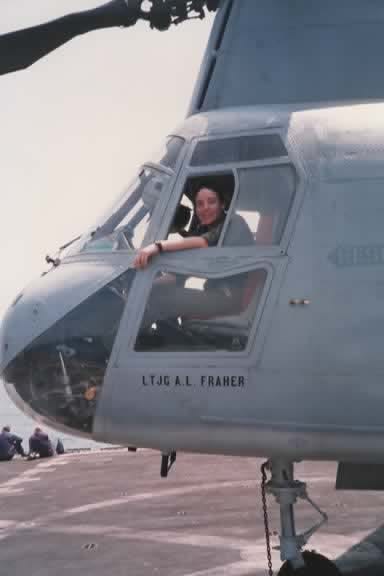
I met my crew to brief and preflight our helicopter, Zero-Five, in the ship’s port helo hangar. It was warmer and safer than out on the open flight deck. Then I strapped into the cockpit and rode Zero-Five out onto the flight deck. As the deck crew pushed, a watchful sailor sidestepped next to the landing gear, ready to throw the heavy yellow chocks around the tires if the ship took an errant roll. Once aligned on the white flight deck markings, the crew chocked and chained Zero-Five down. I started the auxiliary power unit and spread her folded rotor blades, preparing to spin her to life. I could’ve let the mechanics ride her out, align her, spread her. I could’ve gone below deck, taken a break, had a coke. But I wanted to ride her out. My name was painted on the side of Zero-Five; she was my bird.
The ship’s public address system, the 1MC, came alive: On the Milwaukee, Flight Quarters, Flight Quarters. All hands man your Flight Quarters Stations.
My aircraft commander appeared fully suited up and boarded the aircraft, wiggling through the tunnel into the cockpit, folding his large frame into the right seat. I finished the checklist and the rotors began to spin. Zero-Five jumped to life, sounding thunderous yet oddly comforting. On our signal, the deck crew broke down the chains and pulled the chocks, sprinting out from beneath our belly. We were free, untethered from the ship. I lifted the helo, slid right and spun until we were perpendicular to the ship. Pausing in hover, we did our last safety checks, then I pulled power, dipping Zero-Five’s nose with forward cyclic, climbing skyward in a tornado of downwash: A goodbye kiss to the Ole Milwaukee from Zero-Five.
I loved listening to the helo’s familiar sounds as we swung between ocean and sky, suspended by the physics of aerodynamics: lift overcoming weight, thrust overcoming drag. There is music in a helicopter’s clatter, a symphony of sound: rotors phwapp, the airflow hums, the engines purr, the hydraulic pumps whine, and the radios crackle as we skim the sea at just a few hundred feet, fast as a race car.
The battlegroup needed to sail northward to rendezvous for a NATO exercise in a few days, that meant strong starboard winds for flight ops. I’d have to fly it all from the left seat. I felt a familiar knot of excited anticipation twist in my stomach. My heart beat fast, high up in my chest. But my head was clear and my hands were steady. I was ready. The tower gave us a green light. The aircrewmen opened Zero-Five’s hell-hole, a trapdoor in the helo floor, then laid on their stomachs on the deck, looking down to guide us for the first hookup.
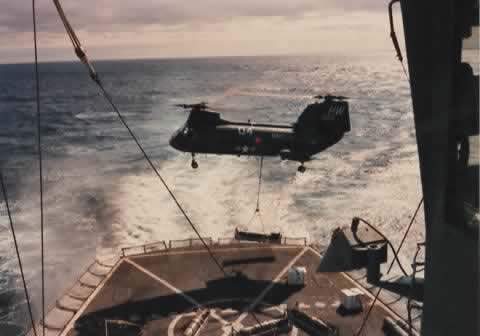
I slid left over the Milwaukee’s fantail, hovering low over the flight deck, as a deckhand ran underneath to hook the external load, then raced clear. I lifted the load gently off the deck then circled hard right behind the two ships steaming in formation. Astern the carrier, I kicked right pedal, pulled a little power and pushed left cyclic, floating up the carrier’s wake sideways for the drop. It was exhilarating, pure seat-of-the pants flying, like when I was a kid, skidding my bicycle sideways on gravel. Then I dove forward to the Milwaukee flight deck for another pick, lifted and circled hard right again, dragging the aircraft nose along the watery horizon that filled our windscreen until the carrier’s wake was visible again. We slung pallets of milk, eggs, toilet paper, shipboard supplies, and aircraft parts. An awkwardly beautiful dance between human and machine: pick, circle right, slide and drop, dive forward; pick, circle, slide and drop, dive; pick circle drop; pick circle drop.
We refueled and flew some more. Zero-Five felt nimble, tight and powerful, dancing under my touch as I caressed her, gently pushing, pulling, urging her to go where I wanted. Zero-Five’s music spoke to me, calming me, reassuring me she could do whatever I asked. NAFOD helped me relax. I saw where we needed to be and then we were there, like magic. We were rider and beast, telepathically connected. Time slipped away. Runners stopped jogging on the carrier’s flightdeck, sailors crowded the weather decks on both ships. Everyone wanted to watch our dance. But Zero-Five and I were alone together, lovers in a crowd, in sync in a sacred space of our own.
We refueled again.
Next, we flew bombs, three to a steel crate, half a sixpack. Although the heavy crates were less likely than the light cargo pallets to oscillate in flight, they had no aerodynamic capacity. Sheer deadweight. Zero-Five and I adjusted. She groaned as I pushed her nose down, snapped her tail around, coordinated pedal and cyclic, sliding sideways, pulling power to slow my rate of descent, then opposite cyclic to slow the slide. Her twin tandem rotor heads dumped a pillow of downwash on the carrier’s broad deck and we alighted in a cushion of air. She sighed, settling into a hover as we dropped the heavy load, and then we dove forward light and free for another pick, engines growling as she strained to lift the weight. Finally, the forklifts slowed, the deck started to clear and we landed.
Seven hours of flight time had sped by.
* * *
Helicopters have to be rinsed at the end of each day; the engines washed clean of saltwater residue. That was my job.
“Cranking one,” I said, moving the engine control level to fire-off the turbine engine.
“Roger ma’am.”
I watched the engine light off and stabilize. “Good start.”
“Water’s going in ma’am,” the crewman confirmed.
“Roger that,” I said, sitting back, sliding the side window open. A fiery orange sun had begun its dip toward the horizon and I smiled to myself, resting my hands loosely on the flight controls, scanning the engine gauges. It’d been a fun day and I felt a sense of pride. For the first time in my life, I felt like I was doing exactly what I was meant to be doing. And I was good at it; damn good at it.
“Water’s still running through, ma’am. Couple more minutes,” the crewman said.
Nightfall approached. The sun was a brilliant orb burning a hole through the darkening sky, the horizon clear and cloud-free, the ocean calm, softening to a gentle grey-blue. I watched the sun’s trajectory. The fireball seemed to accelerate downward once it touched the horizon. I blinked and looked away to clear my eyes. The sunset colors were mesmerizing; I had to look back. The sun was falling fast now, the lower part of the sphere darkening to amber as it contacted the water, melting into a perfect half circle, then a lopsided third. The sky behind vibrated a brilliant orange as the ocean faded to black.
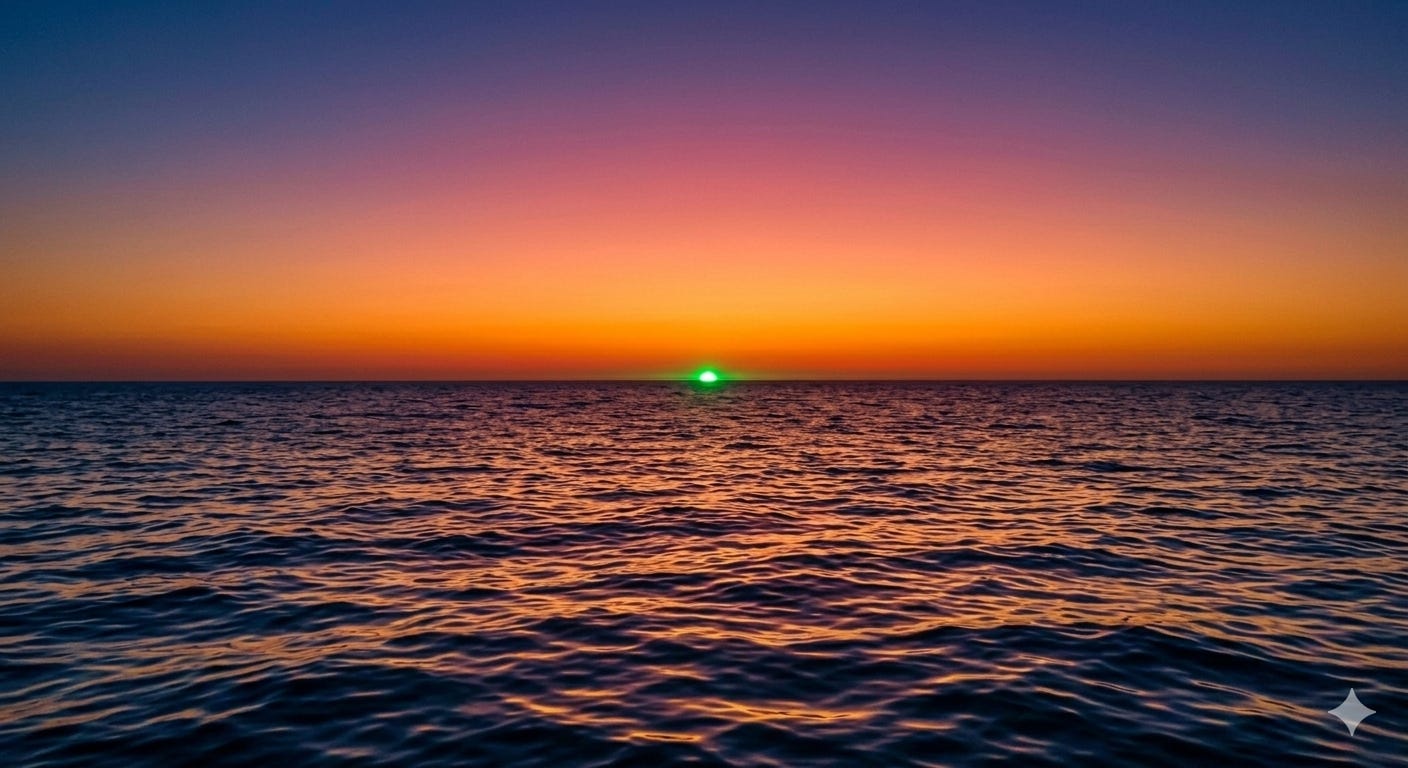
The sun’s decent seemed to slow, the smooth fiery orb resisting the last few degrees of descent into the ocean’s inky surface. I blinked, not wanting to miss anything. When I opened my eyes, the edges of the descending sliver had become ragged and tapered like a white-hot pyramid sinking into the sea, a fiery ‘Eye of Providence’ keeping watch. Then a fuzzy green haze started to blur the edges of the pyramid and a bright green oval slowly appeared, hovering like a space ship over the last sliver of the day’s sunlight and then Bam—a green ray burst like a neon explosion and a beam of luminous green shot up and out in all directions, hanging there for a split second, then dissipating into velvety darkness.
“Holy shit, did you see that?” I said over the helicopter intercom.
“Yes, ma’am. Me and the guys, we were just saying,” the crewman replied.
“Heard about the green flash but never seen it,” I said. “Thought they were yanking my chain—”
“No, ma’am. It’s for real.”
“Did you see how it just exploded—the whole sky flashed green, just for a second.”
“Yes, ma’am. Do enough sea time, you’ll see lots of ‘em. By the way, ma’am. We’re done on one. Ready on two.”
“Roger. Shutting down one. Cranking two,” I said. “Good start.”
“Water’s going in, ma’am.”
“Roger,” I said, taking it all in. “So, what causes a green flash, anyway?”
“I hear it’s like a mirage. You know, part optical illusion, part physics? Like a prism breaking up the light, makes a rainbow.”
“Amazing,” I said. I’d lived all my life near water, never knew about this. What else would I learn out here?
“Water’s running through on two, ma’am. Almost done,” the crewman said.
“I’ve got another question.”
“Ma’am?”
“How’d you know when it’s done?”
“I taste it ma’am.”
“What?”
“The engine—I taste water coming out. If it’s salty, I keep runnin’ em. If it’s clean we’re done.”
“Hm, okay, good to know.”
I have been looking for the green flash without success for twenty years. Glad to hear it is real.