
Exercising Underway
Exploring the Mind-Body Connection Under Pressure

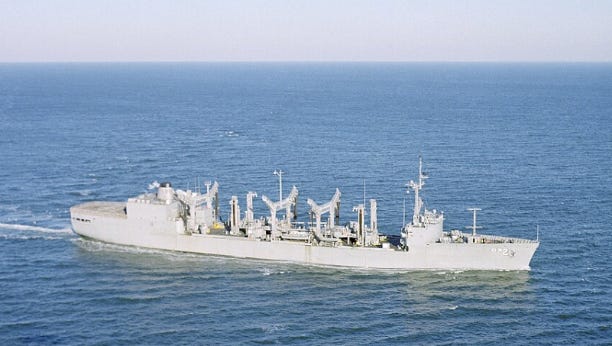
While I was deployed, I’d try to get a run in whenever I could. Not an easy task on a navy ship underway. After Flight Quarters, I’d pull on my PT gear and go where I usually went: three levels down to the freight deck, the longest continuous section onboard the USS Milwaukee. You could run nearly the entire length of the ship down there, as long as you didn’t have claustrophobia or mind dodging forklifts and inhaling diesel fumes.
Ten laps equaled a mile, but I couldn’t think of it that way. It’d make me crazy: Counting fifty laps for a five-mile run? Instead, I’d run through both sides of my homemade mix-tape, stopping to flip the cassette in my yellow Walkman: Tears for Fears, Wham!, Eurythmics, B52’s, INXS, Depeche Mode, Pet Shop Boys, R.E.M., Culture Club, Kate Bush, 10,000 Maniacs.
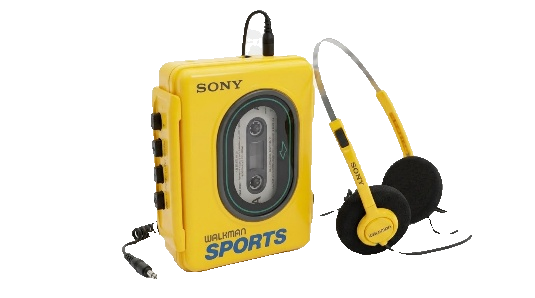
Although the plastic cassette player had a belt-clip, it was too heavy for running shorts, plus the music skipped if the cassette got jostled. I had to perfect a kind of delivery guy maneuver, holding the Walkman steady in my hand like a sweaty pizza.
It wasn’t as bad as it sounds. The dark timeless quality of life deep below decks and monotony of running in circles was like a maritime labyrinth. My mind floated away to other times and places. I envisioned running along a beach or down a forest path, feeling the warm sunshine, smelling the fresh air, listening to nature, feet barely touching the earth, running light, fast, free.
Other times, I thought about my life.
Growing up, neighborhood girls always wanted to play the stupidest games. It started with Barbies. One would brush the doll’s hair or put on a new outfit. Another would join in, and then another.
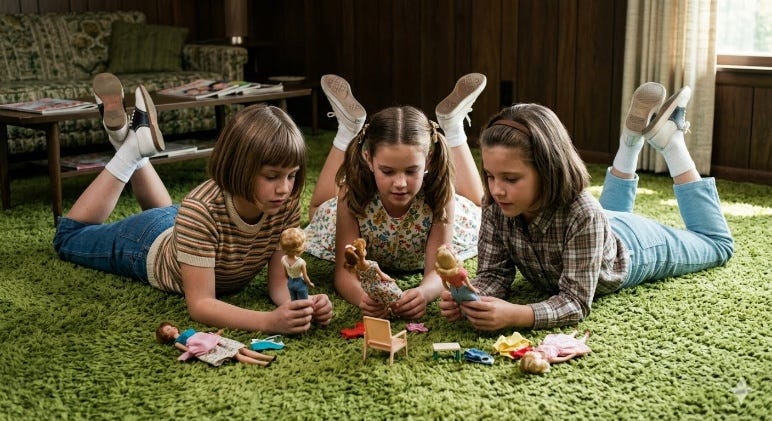
They would lay together on the green shag carpet on their bellies, legs bent skyward, ankles crossed at the Bobbie-socks, swaying back and forth. I’d sit on a foot stool in front of the fireplace, hugging my knees to my chest, watching, confused by their Barbie-play. Barbie never did anything, just got dressed and undressed. I didn’t see how that was fun. And why were Barbie’s tiny white feet mysteriously pointed, perennially awaiting a high-heeled shoe like a plastic Cinderella. After a while, the girls inevitably added another curious element to the Barbie-game: “Who do you want to marry?” Followed by, “How many kids do you want?” Their stamina for these topics baffled me. I’d keep mum until I could slip away, making-up an excuse to leave.
I just wanted to ride my bike, feel movement, airflow, the wind in my face. I wanted to go, even if it was just riding in circles. I loved to ride in circles, tighter and tighter, faster and faster, until I got dizzy. Then I’d lay on the lawn and look up at the puffy clouds as they flew across the sky, my bicycle lying on the grass next to me like a best friend.
When I was eight, I got a new bike; my brother’s hand-me-down. My father and I went to the hardware store, and I picked out the paint color. Purple with little flecks of silver that sparkled when the light hit just right. While my Dad bought the spray-paint, I wandered around the bins of nuts and bolts, nails and screws. I liked how neat and organized it was, each fastener perfectly symmetrical, created for a specific use in its own special place. After the hardware store we went to the bicycle shop and I picked out a purple banana seat, chrome sissy bar, and matching rubber handgrips with two-colored streamers, purple and white plastic. When we got home, we disassembled my inherited bike and soaked the chain in a blue Maxwell House can. I learned how to use an adjustable wrench: righty-tighty, lefty-loosey. Once the frame was stripped bare, we hung it from the garage rafters and spray painted it, two coats. I liked working outside and the waft of oily metal, using tools, getting dirty.
I stopped running and knelt to tie my shoelace, my forehead dripping sweat onto the metal ship deck. I realized in that moment that it never occurred to me to ask for a new bike. I wondered why? I was just a little kid. Maybe I didn’t know where you could buy bikes new. Maybe I just knew we couldn’t afford it. Anyway, my new-hand-me-down bike was better than any store-bought-new bike could’ve ever been. And I remembered I didn’t pretend to like playing Barbies anymore after that.
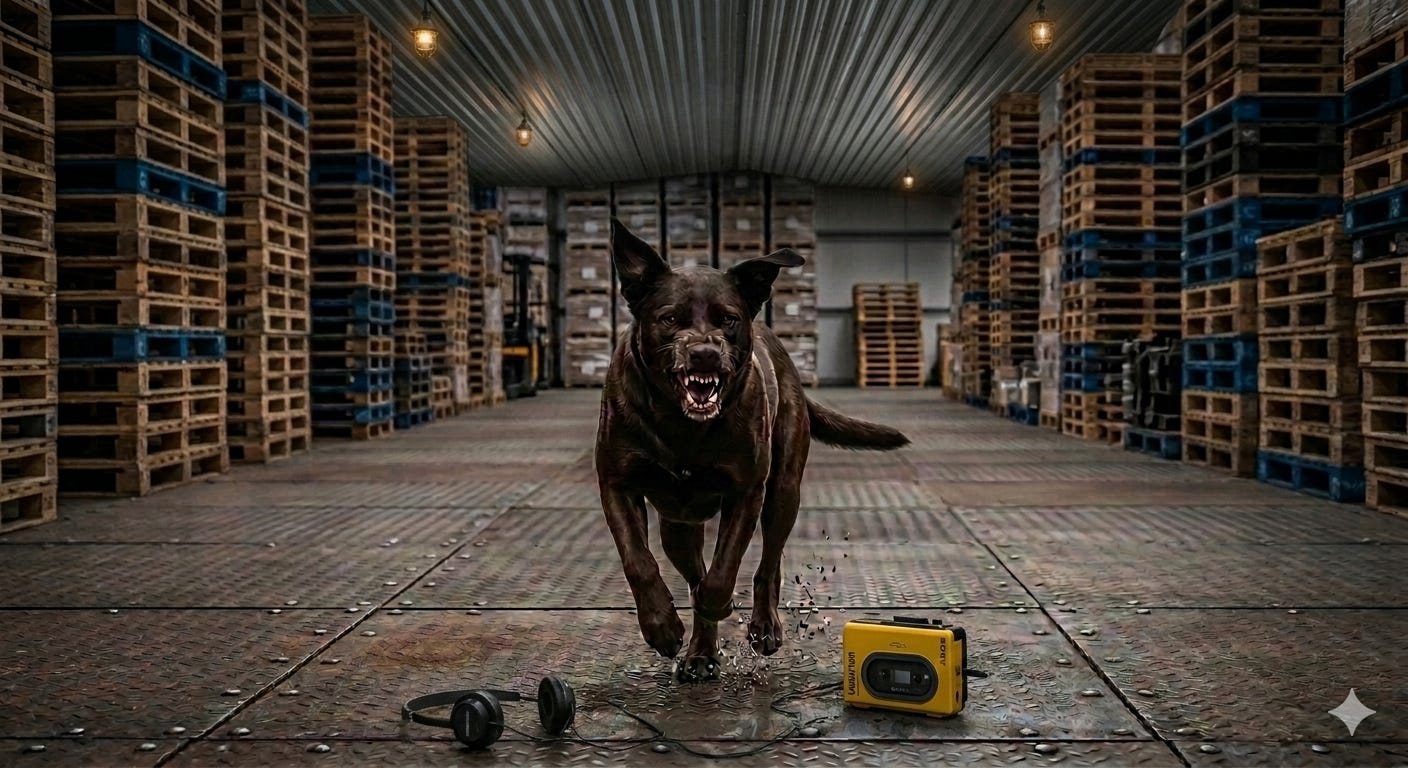
As I stood up, a dog ran out from between two tall stacks of wooden pallets, growling, white teeth barred, black ears back, scruffy dark fur ruffled. I jumped back, almost colliding with a forklift, dropping my Walkman, shattering the plastic cover.
“What the heck—” I cried out, backpedaling, my heart racing.
The sailor operating the forklift stopped and jumped down. “You okay, ma’am?”
“I don’t know,” I said, trying to regain equilibrium.
“That’s just Buster,” the sailor said, reaching down to scratch the dog’s ears. Buster wagged his tail but still eyed me warily. “Ship’s dog.”
“There’s a d-dog…,” I stammered, swallowing hard. “Onboard a Navy ship?”
“Well, technically Buster’s the Captain’s dog. But that makes him the ship’s dog. Anyway, he pretty much goes where he wants to.”
“I see that,” I said, pointing to a big pile of Buster poop nearby.
“Oh, I’ll get that cleaned up,” the sailor said walking off.
Once we were alone again, Buster’s ears went back and he sniffed me suspiciously as I tried to retrieve my broken Walkman.
* * *
Three days later, I was on my nightly rounds distributing the flight schedule to different departments on the ship, one of my collateral duties. As Assistant Operations Officer, my job was to gather battlegroup messages requesting helo support and then organize the next day’s flight schedule, matching flight crews and helos to meet mission requirements. Inevitably there’d be changes, then changes to the changes, and then more changes after that. I often had to distribute hard copies of the final flight schedule around the darkened ship after Taps.
That night, I felt something behind me in the dim ship’s passageway and turned to find Buster following me, warily sniffing with a low growl.
“What is it with you?” I said, pushing the dog away as the ship’s Executive Officer (XO) rounded the corner.
“He’s not used to women.”
“What?”
“Women onboard ship. He’s used to men,” the XO said, patting Buster’s head. The dog grinned, tail wagging. “You smell different.”
“Okay, well thanks for that observation, sir,” I snapped. It was late. I was tired. This dog was annoying. And I wasn’t in the mood for games.
“No, to Buster I mean. You know you are the first?”
“First what?”
“First woman,” he said, like it was common knowledge I should’ve known. “First woman to deploy onboard the Milwaukee. I mean, we’ve had women guests, like in port. Wives and such. No women on deployment.”
“Really? I knew I was the only one onboard now, didn’t know I was the first one ever.”
“Yup. Combat exclusion policy. Women can’t be permanently assigned to a combatant.”
“Isn’t this a combatant—fast combat-support ship?”
“Yup, but Air Det’s TAD—temporary additional duty,” he said, scratching Buster’s ears, causing the dog’s back foot to scratch the air in sympathy.
“That’s how you get around it,” I said, thinking there were lots of secrets around the ship I wasn’t aware of. “Temporary assignments?”
XO nodded. “I’ll take him,” he said, leading Buster away. “He’ll get used to you eventually. Just takes time.”